

Navigating uni choices can be exciting, and understanding the key terms is the first step to making the right decisions. ‘What is a major in uni?’ is just one question you might have – and it’s an important one, especially when you’re starting a bachelor degree or planning your undergraduate course selection as a future student. So, let’s break it down, along with majors and minors, electives, double majors and more. Then you can approach your study plan with confidence, fully prepared to start your uni journey on the front foot – just like our current students who’ve been exactly where you are now.
1. What is a major?
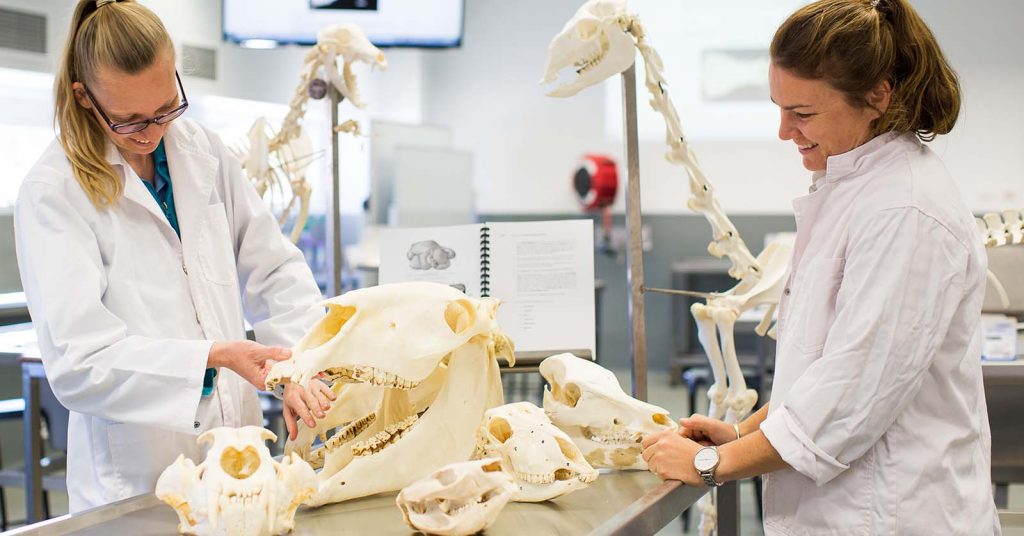
A major is at the heart of your uni degree. It shapes your academic journey. It’s the subject you’ll study most, comprising the bulk of your coursework and study time. Subjects related to your major will account for approximately a third of your course load. For instance, in our Bachelor of Science, you can choose from five majors: analytical chemistry, biology, Earth science, mathematics and physics.
Let’s say you select the biology major; you could explore everything from microbiology and parasites, to animal, vegetation and landscape ecology. The goal? To gain in-depth knowledge about the field, so that by the time you graduate, you’re ready to apply your learning in the real world.
2. What is a minor?
A minor is like a mini-major (don’t you just love the sound of all those m’s?). It’s fewer subjects, but still a powerful addition to your degree. Depending on your course, you can choose a minor to complement your major, like business with a marketing minor, or one that’s less obviously aligned but speaks to another passion, like communication with a dash of history. Minors let you diversify your skills and knowledge without the full commitment of a major.
3. How to choose a major

Choosing your major is a big decision, sure, but it doesn’t have to be stressful. Start by asking yourself some simple questions: What excites you? What are you good at? Which subjects in high school get your blood pumping? Moreover, think about where you want to be in the future – are you drawn to the lab, the classroom, health sciences or the corporate world, for instance?
Take advantage of uni open days and chat with your careers advisers. Look at entry pathways, subject prerequisites, and any course selection guide info that applies to you. The more you explore, the clearer your path becomes. And remember, you can usually change your major once you get started. It’s very normal.
4. What is a double major?
Hold on to your hats for the big reveal: a double major means doing two majors within a single degree. Who knew? Seriously, though, a double major gives you the chance to, yes, double down on your passions. You’ll cover the complete core subjects for both areas, effectively mastering two specialties.
This not only broadens your expertise but can also unlock a wider range of career opportunities. Keep in mind, though, a double major typically comes with a heavier workload – so make sure you’re ready to tackle the challenge. (And if you’re comparing it with a double degree: very different thing, but always worth exploring.)
5. Can I study overseas and still complete my major?
If your course allows for it, you could definitely explore overseas study programs. Just make sure the courses you plan to take abroad align with your degree requirements back home! Studying overseas isn’t just about the academic stuff; it’s also a chance to gain fresh perspectives, meet new people and have adventurous student experiences. Imagine learning in a whole new environment and coming back with memories (and skills) that last a lifetime! Sounds pretty sweet, right?
6. What is a specialisation?
So, it’s true that a specialisation is pretty similar to a major. It’s also a focused area of study, that lets you go deeper into a specific area of your field. Moreover, it typically requires the same number of credit points as a major. Which all means that you’ll often find the terms ‘specialisation’ and ‘major’ used interchangeably. However, one common difference is that a major usually appears in your degree title when you graduate, like this: Bachelor of Science (Biology).
7. What are electives?

Electives are where you get to explore areas beyond your major or minor. These subjects give you the chance to study all of your passions. Like minors, you might be able to choose from electives within your field or select subjects from across the university. From social sciences to liberal arts, health sciences, creative subjects or elective units tied to career options, electives help you shape a study plan that reflects who you are and where you want to go.
8. What are core subjects?
Core subjects are the must-take classes in your degree. Think of them as the backbone of your course. They’re all about giving you the essential knowledge and skills you need to excel in your field. So, for example, imagine you’re studying a Bachelor of Accounting1 – your core courses will take in things like tax, business law, economics, data analysis and auditing. Core subjects are the ones that make sure you’ve got a rock-solid foundation to set you up for success in your future career.
9. What is a capstone project?
In some courses, during your final year you’ll complete a capstone project – a requirement that brings together everything you’ve learned in your degree. For example, if you’re taking the Bachelor of Engineering (Honours)2, you’ll complete a unit where you develop a full research plan for your capstone thesis, including your research question, literature review and project design.
These projects aren’t just academic tasks; they’re practical proof of your capability and look impressive in portfolios, graduate applications or when exploring research degrees.
10. How many credit points do I need to graduate?
In Australia, university degrees revolve around credit points (though, not literally, that would be weird). Each subject you take comes with a set credit value, and to graduate, you’ll need to hit a specific overall total. At Charles Sturt University, a bachelor’s degree usually demands 192 credit points. A standard subject is worth eight points. In the Bachelor of Arts3, for example, your major will account for 64 points, while a minor would be 32 points. (We’ll let you do the sums.)
Getting to grips with how university courses work can sometimes seem like learning a new language, but once you get the hang of it, you’ll see that it’s all about discovering your passion and making it fit your goals. So, use uni resources, ask questions, attend events – and don’t be afraid to reach out for advice.

You must be logged in to post a comment.