
If you’ve ever looked at the news and thought, “Someone needs to fix this climate mess,” here’s the good news – that someone can be you. There are many exciting careers fighting climate change that go way beyond lab coats and lectures. Whether you’re into science, tech, animals, communication or even politics, there’s a path where you can use your skills to protect the planet and build a future you’re proud of.
According to the CSIRO (the Commonwealth Scientific and Industrial Research Organisation), Australia’s climate has warmed by approximately 1.5°C since records began in 1910. And our weather systems are changing along with it. Sea-level air pressure is rising, and rain systems that could usually be relied upon each season are no longer forming. Plus, we’re getting more (and increasingly extreme!) weather events like bushfires, heatwaves and floods.
It’s a tough thing to think about, but there are plenty of ways that you can make a real difference in Australia’s climate future.
In this article
This is your guide to the coolest, most meaningful climate jobs that actually make a difference.
You’ll discover what each role does, why it matters and what you can study right now to get started. If you want a career that feels purposeful and genuinely world‑changing, you’re in the right place.
Careers fighting climate change
Fighting climate change can come in many forms. Lots of people make little changes in their behaviour and habits to help reduce their personal footprint. Changes like walking or riding public transport instead of driving, and reducing their plastic waste through recycling programs.
But if you want to make an even bigger difference in the world, there are ways you can do it! You can become part of the solution – by joining up with Australia’s environmental science community to help guide international policy and change public perceptions.
1. Meteorologist
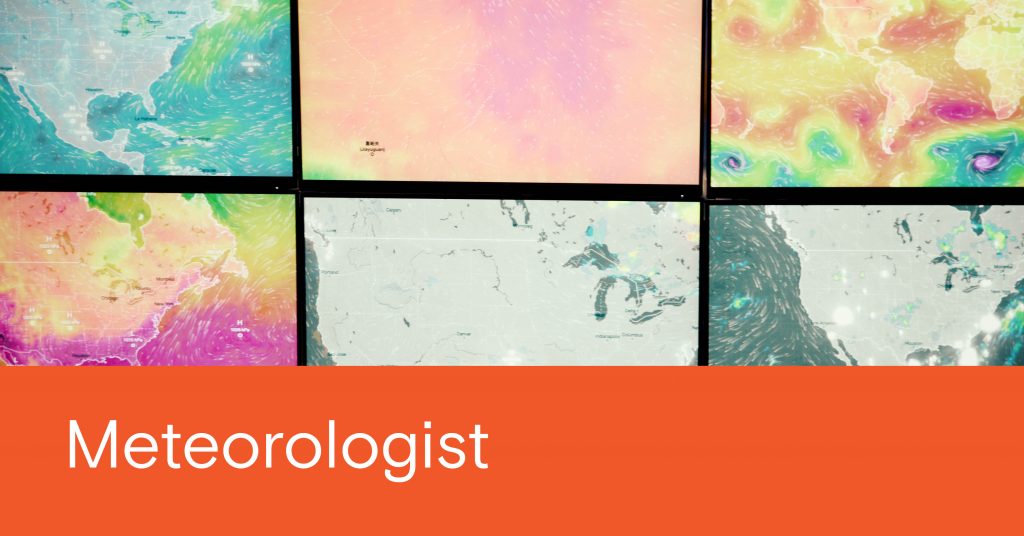
Meteorologists study weather patterns and climate systems. They work out what Earth’s atmosphere is doing. They also explain why it is changing. This matters because accurate climate modelling helps predict extreme events like heatwaves and floods – which are becoming more frequent due to climate change.
The intensity of short-duration extreme rainfall events has increased by around 10% or more in some regions… Short-duration extreme rainfall events are often associated with flash flooding. This is particularly the case in urban environments, where the prevalence of impervious ground cover (e.g. concrete) leads to increased flooding during heavy downpours.
Pick this career if… you’re the kind of person who loves watching storm clouds roll in, or you check the weather app way too often, you can turn that natural curiosity about weather into real-world impact. Meteorologists are like an early-warning system to help communities prepare for extreme weather caused by climate change – and that early intervention really does save lives.

2. Environmental policy advisor
Environmental policy advisors help write the rules that protect the planet. They work with governments and organisations to reduce emissions, enforce environmental laws, and guide industries toward sustainable practices. Policy is becoming increasingly more important as countries strengthen climate commitments, like the 2015 Paris Agreement.
Pick this career if... you’re passionate about fairness, justice, and making big‑picture change. Policy advisors don’t just talk about problems – they help design the systems that solve them. If you want to influence how entire countries respond to climate change, this is your chance.
3. Renewable energy engineer
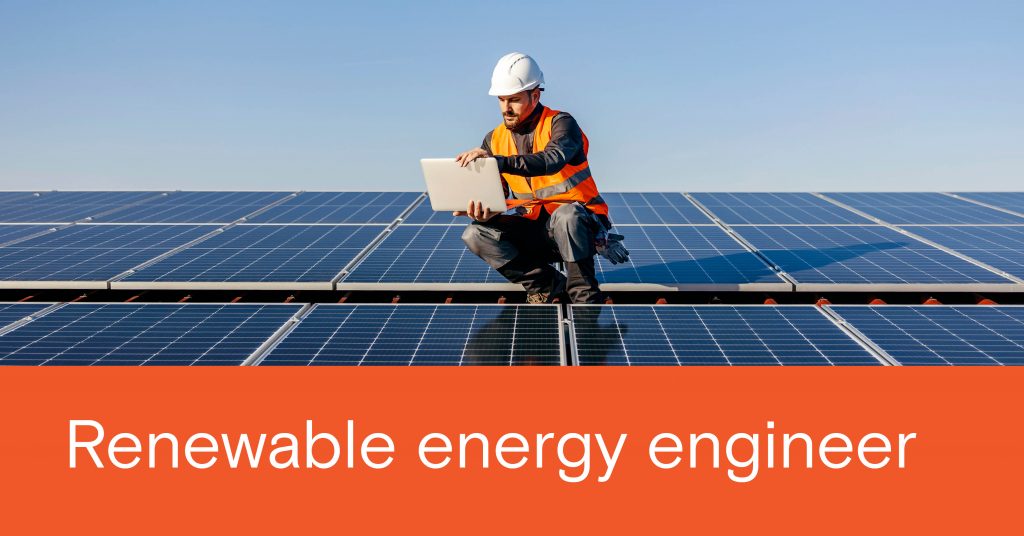
Renewable energy engineers design and improve clean‑energy systems like solar, wind and hydro-electric. Switching to renewables is one of the fastest ways to cut global carbon emissions, making this career a frontline climate solution.
Pick this career if… you want to combine your love of mathematics and structures with your passion for protecting the environment and building new energy pathways for future generations to enjoy.
Keen on tackling climate change from an engineering perspective? You’re not alone. Studying a Bachelor of Engineering (Honours)1 with Charles Sturt and choosing any of our three majors (civil, electrical or mechanical), you’ll be set up for a future building solutions for tomorrow’s energy challenges.
Did you know? Not only are we proud to be Australia's first carbon-neutral university, but we've also made a historic deal to source all energy for our campuses from renewables. Starting on 1 January 2025 and continuing through 31 December 2027, Charles Sturt's campuses in Albury-Wodonga, Wagga Wagga, Bathurst, Orange, Dubbo and Port Macquarie will be powered by Snowy Energy’s TrueGreen™ 100 per cent renewable electricity. Read more about our commitment to renewables here!

4. Science communicator
Science communicators turn complex climate science into fun, easy‑to‑understand videos. With millions of young people getting their news from social platforms, climate educators play a huge role in fighting misinformation and inspiring action. In fact, around 70 per cent of Gen Z say they learn about climate issues through social media. Which means creators who explain science clearly can have massive impact.
Pick this career if… you want to make a living combining creativity with climate action. You can be the person who makes science feel exciting instead of intimidating – the one who helps people understand what’s happening to the planet and what they can do about it.
Sound like you? Why not try studying a Bachelor of Communication and Media2 from Charles Sturt? You’ll learn everything you need to know to build and communicate with your audience. Whether you’re filming experiments or breaking down climate myths, your passion becomes a spark that helps others care too.
5. Climate researcher
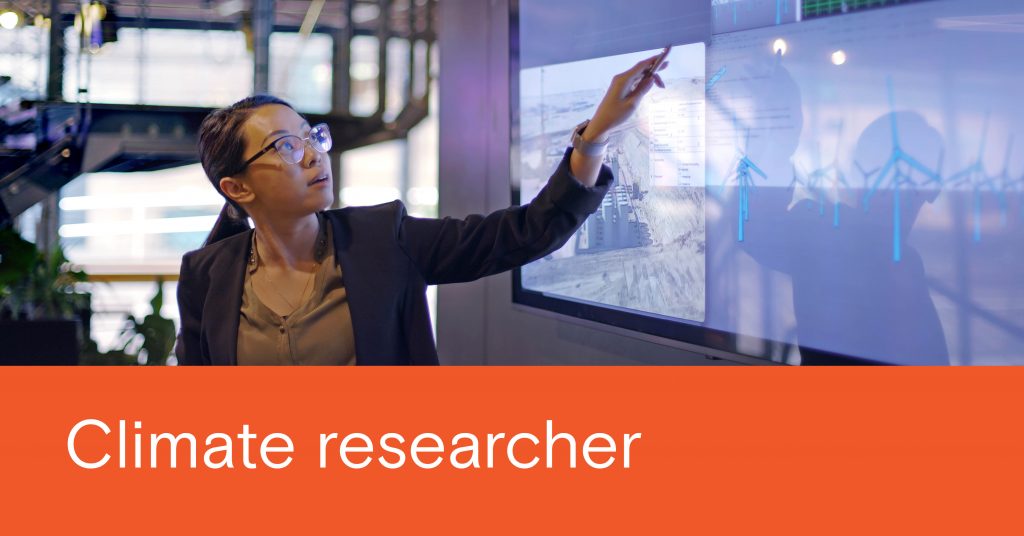
Climate researchers explore everything from carbon‑capture tech to how ecosystems respond to warming. Their work drives new solutions – for example, algae‑based carbon capture is being trialled in Australia to reduce industrial emissions. Reducing emissions by storing extra carbon dioxide in the stuff that floats around in lakes, how cool!
Pick this career if… you’re curious, love experiments, or want to be on the cutting edge of climate innovation. Climate researchers are the people who discover the breakthroughs the rest of the world relies on – so your passion for science becomes a push toward careers fighting climate change.
Interested in diving deeper into research to find answers to solutions through science? You might be interested in a Bachelor of Science from Charles Sturt!
Charles Sturt prides itself on focusing on the issues that affect our local regional communities. Check out some of our research being done in ecology and conservation by our very own Professor Geoff Gurr!

6. Environmental lawyer
Environmental lawyers fight for cleaner air, safer water and climate justice. They take action against pollution, deforestation and environmental harm – roles that are becoming even more important as climate impacts intensify.
Pick this career if… you’re passionate about standing up for what’s right. Environmental law gives you the power to defend communities, ecosystems, and even entire species. If you want a career where your voice can literally change the world, this is it.
Think a career in the climate justice side of the fight is for you? Maybe you might be interested in studying a Bachelor of Laws with us here at Charles Sturt. With a diverse set of majors and electives, you’ll be able to specialise your law experience toward agricultural and mining industries, or environmental and cultural heritage protection laws.
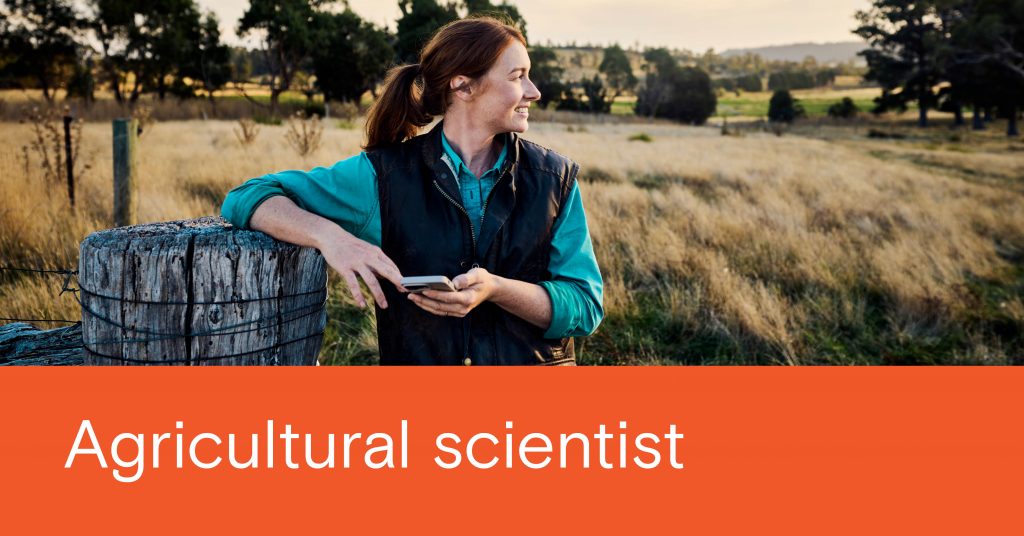
7. Agricultural scientist
Agriculture is responsible for around 18% of global greenhouse gas emissions, so improving farming sustainability is a huge climate win. Agricultural scientists work on soil health, crop resilience and reducing methane emissions from livestock.
Pick this career if… you love animals, food, and being outdoors. This career lets you protect the planet while feeding the world. You’ll help farmers adapt to climate change and create more sustainable food systems – meaning your work directly supports both people and the environment.
Want to read more about how to build a career in climate-friendly farming? Check out our article on the future of agriculture!
What else can I do to help cope with the climate crisis?
Aside from going into a career path that matters, there are also lots of things you can do personally to feel better and help fight for climate justice. What matters most is that you don’t try to push yourself to do anything you can’t do. Each step is just as important as the big stuff.
- Low-carbon transportation: Ride your bike, walk, or take the bus instead of getting a lift. It’s good for the planet and the fresh air is great for your brain.
- Build an alliance: When you combine forces with other people who care about the same things you do, not only does your voice grow louder, but you can make lifelong friendships too. Try setting up or joining a club!
- Swap, don’t shop: Try swapping clothes with your friends instead of buying new ones. And if you do need something new, try getting it from an op shop like Vinnies.
- Ethical purchasing: If you’re out shopping and you have the choice between recycled and non-recycled, or ethically-sourced and not, choose the option which is going to help the environment more. As a consumer, you can let companies know your opinions on the climate crisis with your wallet.
- Do some citizen science: Help count native frog populations, upload weather data, or track seabird migration. All you need is a smartphone! Try the Atlas of Living Australia or Climate Watch to get involved.
- Shop at local farmer’s markets: Buying local cuts emissions, supports your community and empowers growers. Find one near you at farmersmarkets.org.au.
- Work to restore local environments: Whether it’s picking up rubbish at your local beach with CleanUp Australia or pulling weeds and planting native forests with Landcare, you’ll be doing your part to restore your local ecosystem one piece at a time.
- Donate to good causes: If you’ve got some cash to spare (and only if you’ve got it to spare!) then you can consider donating some of it to a cause that’s close to your heart.
Other ways to cope when everything feels like it’s too much
Set boundaries to exposure. Too much knowledge can sometimes be a bad thing. Set yourself some limitations on how much climate info you consume. Whether that’s by setting a time limit for scrolling, unfollowing any overly-dramatic or doom-and-gloom outlets, or ensuring that you’re filling your feed with accounts that post good news more often than bad.
Be kind to yourself. Take on radical self-care, which is the idea that taking care of yourself and looking out for your own mental health is actually a really radical act in a world that doesn’t want you to prioritise yourself. Take a bath with a foamy bath bomb, or do your normal self-care routine and add in six extra luxurious steps.
Choose to feel joyful. Another one of those radical things is choosing joy despite the fact the world feels a little grim. Do things that help you feel alive: dance, sing, get together with friends, eat something tasty just because. Use the expensive pencils instead of letting them sit in the tin.
Practice grounding habits. Try taking up yoga or stretching, going for mindful walks, meditating, or just going outside and sitting under a tree for a while. Picking up one small habit like this can be a useful coping strategy when you’re feeling anxious about the world.
Your career choices in summary
| Climate-fighting career path | Why to pick it |
| Meteorologist | You’re always checking the weather app before you go out |
| Environmental policy adviser | You’re keen to change the whole system from the inside |
| Renewable energy engineer | You want to use your mathematical powers for good |
| Science communicator | You’re spending time on Tiktok anyway, so you might as well use it to educate others |
| Climate researcher | You’ve been doing experiments with chlorophyll since you were 4 years old |
| Environmental lawyer | You’ve watched Suits 100 times and now it’s time to live it, climate-style |
| Agricultural scientist | You love farm-to-table dining so much you want to be part of every step in the process |
But how do I start?
What do all these careers fighting climate change have in common? You can get into most of them by studying a Bachelor of Environmental Science and Management3 with us at Charles Sturt! With diverse majors to choose from (including Climate and Sustainability!), you’ll learn loads of unique skills that will empower you to take charge of our planet’s climate and lead the way toward a more sustainable, greener future.
Did you know? You can apply for an offer into the Bachelor of Environmental Science and Management before you even sit your exams, through our Charles Sturt Advantage early offer program. The program focuses on your soft skills, like determination, resilience, and the passion to leave the world a better place than you found it – all skills we absolutely need in the new generation of climate warriors.
Want to know more about how to apply? Have a chat with our friendly team.
- Course CRICOS 117609F
- Course CRICOS 0101020
- Course CRICOS 103015C
You must be logged in to post a comment.