

Imagine a career where you help bring new life into the world. To help people start or grow their families. To support parents on their pregnancy journey. Could there be a more meaningful and person-centred role than being a midwife?
Midwives are in high demand throughout Australia. From the city to the regions and the outback. And midwifery at Charles Sturt’s focuses on building strong, community-minded midwives with the expertise needed to support rural and remote communities.
But how do you become a midwife?
In this guide:
- Why choose midwifery?
- What does a midwife do?
- How to become a midwife
- Education and pathways into midwifery
- Midwifery degree experience
- Graduation and employment
- Registration and licensing
- Specialisation pathways
- How long does it take to become a midwife in Australia?
- Why study midwifery with Charles Sturt?
- FAQs
Why choose midwifery?
Think midwifery is just about attending childbirth? It’s so much more! Midwifery focuses on supporting parents through pregnancy, labour, birth and postpartum. Most importantly, midwives ensure safe and holistic care for both mother and baby. They play a vital role in promoting positive birth experiences and maternal wellbeing.
In Australia, demand for midwives is growing, particularly in regional and rural areas, where workforce shortages are noticeable. Midwifery is a well-paid profession with salaries typically ranging from $95,000 to $115,000 per year, depending on experience, location and role.1
What does a midwife do?
Midwives play a deeply personal role in one of life’s most meaningful journeys. They support women through every stage of pregnancy. From antenatal care, where they monitor health and guide birth choices, to the intensity of labour. They also offer patients reassurance and pain management. During birth, midwives are a steady presence, working closely with doctors to ensure safety while empowering mothers. They continue with postnatal care, helping families adjust, support feeding and check the wellbeing of the mother and baby.
Midwives work in hospitals but can also be found in community settings, clinics or private practice. It’s a dynamic and rewarding career that combines medical skill with compassion. Midwives have the unique opportunity to make a lasting difference at the very start of life.
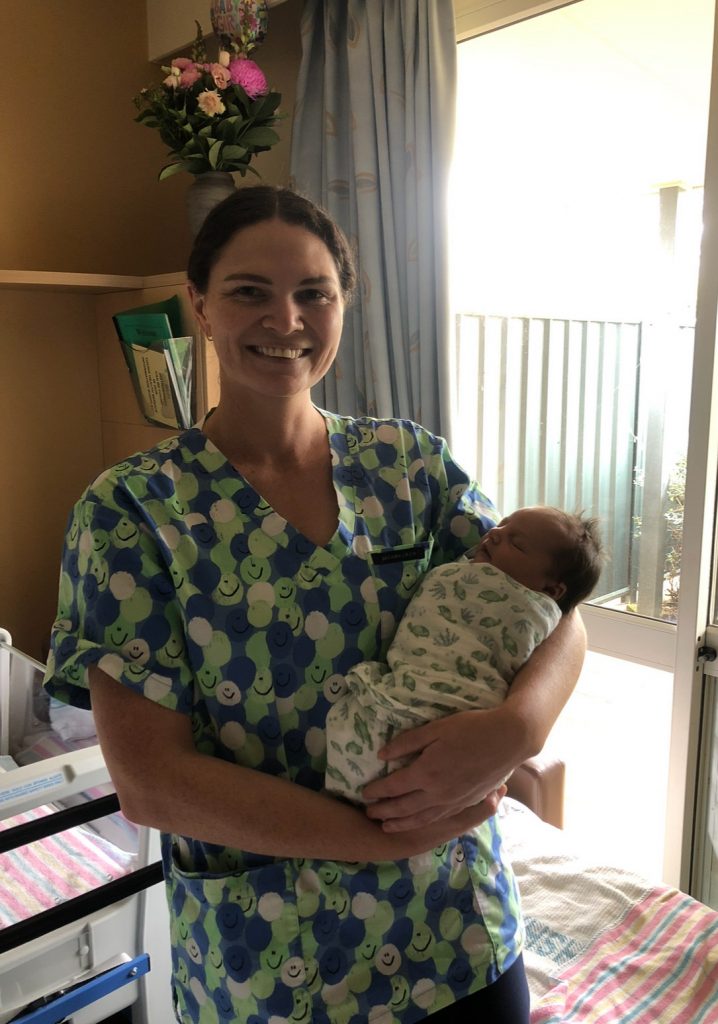
“I am currently working at Royal Darwin Hospital as a new graduate midwife. So far, I’ve worked on the maternity ward, caring for antenatal and postnatal women and their babies and completed a rotation in the special care nursery.
No two days are ever the same. Each area brings its own challenge and learning opportunities, but it’s incredibly rewarding. I feel very grateful to be a midwife and to support women and families through such a significant time in their lives.”
Eleanor Mullany
Charles Sturt nursing alumni
How to become a midwife
There are four steps to becoming – and staying – a midwife.
| Step 1. Nursing bachelor’s | Gain a bachelor’s degree in nursing to become a registered nurse. |
| Step 2. Midwifery qualification | Study a diploma of midwifery. |
| Step 3. Registration | Get registered with the Australian Nursing and Midwifery Accreditation Council (ANMAC). |
| Step 4. Ongoing training | Undertake professional development. |
Step 1. Education pathways into midwifery

Midwifery is a highly specialised area of nursing that requires a strong foundation in nursing and specific midwifery skills. As such, you need to complete two degrees.
Undergraduate degree
- A Bachelor of Nursing2 is the ultimate foundation in nursing and a standard pathway for high school graduates.
- The bachelor’s includes practical experience through work placements in hospitals and other healthcare organisations (more than 800 hours when you study with Charles Sturt).
- Plus, our nursing and midwifery courses are fully accredited by the Australian Nursing and Midwifery Accreditation Council (ANMAC), so you’ll graduate with qualifications that are recognised across Australia.
Graduate pathway
- Once you graduate from your bachelor’s, you could go straight into a Graduate Diploma of Midwifery.
- Alternatively, you could work as a nurse to gain experience, then complete your diploma after you’ve been working for a while.
With your two qualifications in the bag, you then apply to the Nursing and Midwifery Board of Australia to register as a midwife. To maintain registration, you need to do 20 hours of professional development each year. This could include attending lectures or conferences, or running training sessions at your workplace.
Step 2. Midwifery degree experience

When you study midwifery with Charles Sturt, you’ll learn all the essential skills and knowledge to become a qualified midwife.
- Start with an introduction to patient-centred midwifery care.
- Learn about the complexities in midwifery.
- Dive into midwifery practice experience and pharmacology.
- Learn about the different contexts of midwifery care.
- Find out how to provide specialised care for First Nations families.
- Gain clinical experience from antenatal clinics, labour wards and community settings.
Important: To study a Graduate Diploma of Midwifery, you must hold a current student midwife employment contract as a condition of entry.
Step 3. Graduation and employment
After graduating, consider entering a Graduate Midwife Program through a hospital or community health service. These programs are great for helping you transition into professional practice. Expect support, mentoring and hands-on experience across antenatal clinics, postnatal wards and birth suites.
Want to become a midwife in the country? Regional hospitals can offer a major advantage. They give graduate midwives broader clinical exposure, greater continuity of care with patients and earlier leadership opportunities. Not to mention the smaller, close-knit teams.
Step 4. Registration and licensing

To work as a midwife in Australia, you’ll apply for registration through the Australian Health Practitioner Regulation Agency (AHPRA) under the Nursing and Midwifery Board of Australia. Registration confirms you meet professional standards required to practise safely and legally.
As part of the application process, you’ll also need to meet additional requirements:
- Criminal history checks
- English language skills standards
- Recency of practice requirements
- Professional indemnity insurance arrangements.
Once approved, you can officially practise as a registered midwife anywhere in Australia.
Specialisation pathways
Midwifery can open the door to a wide range of specialisation pathways. Many midwives choose to work in continuity-of-care models. This means supporting women throughout pregnancy, birth and the postnatal period to build long-term relationships with families. Others pursue rural generalist maternity roles. You could work across a broader range of healthcare settings and develop advanced clinical skills in regional or remote communities.
Passionate about newborn health? Neonatal special care allows you to support premature or unwell babies during the earliest stages of life. You could also move into lactation consulting and become an International Board Certified Lactation Consultant, helping families with infant feeding and breastfeeding support.
There are also opportunities beyond direct patient care. Areas like clinical education, research, leadership and unit management roles. These pathways allow experienced midwives to mentor future healthcare professionals, influence maternity care practices and shape women’s health services.

How long does it take to become a midwife in Australia?
Generally, a bachelor’s degree in nursing takes around 3 years full-time, and a graduate diploma in midwifery takes 1 year full-time.
| Study pathway | Full-time duration | Part-time considerations |
| Bachelor of Nursing | 3 years | 4-6 years, depending on study load |
| Graduate Diploma of Midwifery | 1 year | 1.5-2 years depending on subject/session selection |
Why study midwifery with Charles Sturt?
Studying midwifery with Charles Sturt means joining a uni known for our industry-ready health grads. With flexible study options, personalised learning and a focus on student wellbeing, you’ll be supported all the way. From your first class through to your career and beyond.
Benefit from regional connections and strong employment outcomes. Access hands-on placements, community-based learning and opportunities to make a meaningful impact where midwives are needed most.
Ready to start your journey? Apply for the Bachelor of Nursing or Graduate Diploma of Midwifery and take the first step towards a rewarding career in maternity care.
And, if you want some more guidance on how to become a midwife, just reach out.
FAQs
What ATAR do I need to become a midwife?
If you’re coming to uni directly from high school, you’ll need an ATAR of at least 65 (this can change from year to year).
Are placements guaranteed?
Clinical placements are a required part of midwifery study. Placement locations can include hospitals, community health services and regional healthcare settings.
Can I become a midwife without first becoming a nurse?
Yes. Some universities offer direct-entry midwifery degrees. A common pathway to midwifery is completing a nursing degree first, followed by a Graduate Diploma of Midwifery.
Do midwives earn more in rural areas?
Rural and regional roles may offer additional financial incentives, relocation support or allowances, depending on the employer and location.
Can internationally trained midwives work in Australia?
Yes, but you must meet the registration requirements set by AHPRA. This may include skills assessments, English language requirements and additional study.
- Healthcare Australia, 2026 ↩︎
- Bachelor of Nursing CRICOS codes: 010599C, 0101019 ↩︎

You must be logged in to post a comment.