

Are you curious about criminal behaviour and what leads a person to commit a crime? Maybe you’re a fan of true crime podcasts or you want to help make the world a more just place. Studying criminology is the perfect way to combine your interests in crime with a career that will always challenge you.
Criminology unveils the reason why people commit crimes. Studying criminology helps you develop an understanding of the social, psychological and legal angles of crime.
A common misconception of criminology is that it will only lead you into a career in policing or forensics – but it is actually so much more. If you choose to study criminology, you’ll investigate the root causes of crime, the psychological and social factors that drive behaviours and how society responds to them.
In this article you’ll learn all about what you actually do with a criminology degree, what career opportunities it will open and why it might be the perfect course for you.
Criminology vs forensic science

Criminology and forensic science are often grouped together in conversation as one, but we’re here to help you understand the difference between the two career areas.
The difference is that criminology is about analysing and understanding the behaviour of criminals. Why did they commit a crime, what factors impacted these actions and how to prevent them in the future.
Forensic science is about finding out what happened at a crime scene. Forensic scientists are asking questions like ‘who was involved’ and using DNA testing and science to help uncover the truth in criminal investigations.
We’ve put together a table to help.
| Career area | Criminology | Forensic science |
| Core focus | Society and human behaviour | Science and physical evidence |
| What you study | Laws, policy, crime prevention methods and the human mind | Biology, chemistry and DNA testing |
| Common jobs | Corrections officer, policy maker or researcher | Forensic scientist, lab analyst or crime scene investigator |
| What to study | Bachelor of Criminology | Bachelor of Science |
If you’re interested in exploring both, you can choose to study a Bachelor of Criminology and major in forensic science at Charles Sturt.
Why study criminology
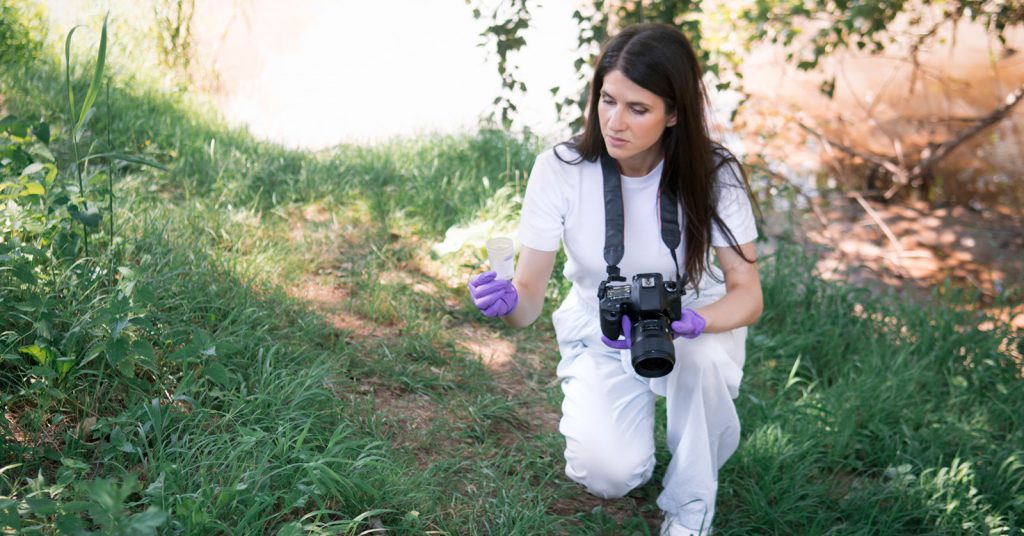
If you have an interest in crime, studying criminology could be the best career for you to turn your passions into a career that can make a big difference in society. Understanding criminal behaviour and how society responds to it, is the first step to look beyond stereotypes and make change in Australian society.
In Australia, crime is complex and evolving, with areas like cybercrime growing quickly.
There’s plenty of work to be done in order to prevent crime.
Dr Piero Moraro is a lecturer at Charles Sturt with a background in teaching human rights, social justice and Indigenous justice, and researching punishment issues. Dr Moraro asks his students studying criminology to look beyond the stereotype.
“As a teacher, my goal is to encourage students to start thinking and asking questions. I want students to challenge their preconceptions. I don’t want them to agree with me. I don’t want to show that I’m right and they’re wrong. In fact, it might well be that I’m wrong and they’re right. I certainly learn from them.
Studying criminology helps them to understand that the criminal justice system is much more complicated than the media makes it look. You cannot summarise it in a slogan or find a one-size-fits-all approach. And you cannot label people as bad simply because they breach the law; you need to see where they’ve come from and the experiences they’ve had”.
With a degree in criminology, you could find yourself working over many different sectors of crime. Digital crime like hacking, identity theft and fraud scams are increasing in Australia each year.
As the population relies on the internet for more daily tasks like internet banking, booking medical appointments and online shopping, our personal details are stored online and vulnerable to cybercrimes. In 2025, The Australian Signals Directorate’s (ASD) received over 84,700 cybercrime reports, an average of one report every 6 minutes1.
The increase in cybercrime also means there’s a shortage of professionals who can help prevent and respond to these crimes. With an interest in cybercrime and a degree in criminology, you could help fill the gap!
Australia needs more professionals to help understand cyber criminals, their motives and actions, to help protect Australians from falling victim to these types of crimes. Jobs in this specialised area would include anti-money laundering analysts, fraud and cybercrime investigators or cyber policy.
What skills employers want

To work in the field of criminology, there are a few transferable skills that would be good to have to help you secure a job after graduation! You’ll be able to hone these skills while studying.
We’ve put some of these skills together for you, so you can understand what your future employer will be looking for.
| Skill | What it means | How to get them |
| Critical thinking | Analyse and evaluate information by asking questions, spotting bias and testing evidence to make a judgement. | Practice asking questions in class and compare information from different sources. |
| Research | The ability to find, consume and collect information to help create a solution. | Learn how to find reliable sources and how to effectively read data and reports. |
| Data analysis | The ability to decipher, collect and communicate data to help provide evidence and create solutions to problems. | Practice reading graphs and tables in subjects like maths and science. |
| Report writing | Research, plan and edit reports to communicate complex ideas to educate other professionals. | Learn how to write reports, organise ideas and use evidence to support your points. |
| Understanding of the justice system | Working within or very closely with the justice system, an understanding is vital to understand crime and to help make the world a more just place. | Choose elective subjects like legal studies and stay up to date on current events in the news. |
Building these skills while studying, along with your soft skills, will help you be a more attractive candidate for a role in the industry after graduation. Charles Sturt courses are designed with a strong focus on building real-world skills and getting you ready to find a job.
Our criminology degree will challenge you and how you think about criminals and the justice system. Dr Moraro says,
Those students who have the strongest opinions – and believe that criminals should suffer because they are horrible – are rarely open to discussing alternatives. They may be afraid of conceding that inmates need help and are often victims themselves.
But this subject is all about challenging how our students think. They become a little less confident. They begin to question their opinions. For example, people’s anger towards criminals can start to vanish once we explore the demographics of those in prisons – many who are from disadvantaged backgrounds.”
How criminologists read data
When studying criminology, you also need to understand the limitations and obstacles that can occur when reporting and interpreting data and implementing strategies. Public perceptions, the media and limitations to information are all factors which could impact how data is presented.
Public perceptions of crime often differ from what the data actually shows, often thanks to the media. Working in criminology means looking past the opinions and bias of the public and the media and using the facts to guide decision making.
“I like seeing the light go on when someone studying criminal justice is faced with something they have never thought about. They have to reset their assumptions about what is happening. If I can lay just one seed of doubt that there may be more to things than what the media tells them, that is, for me, success.” Dr Moraro.
Jobs opportunities in criminology

There are a wide range of job opportunities available to you if you study criminology. We’ve broken them down for you, with a little insight into what you would be doing in these roles and how much you could make.
| Job title | Brief description | Average salary (Seek) |
| Criminologist | Develop strategies to prevent crime and promote rehab through analysis of the societal impacts, causes and patterns of crime. | $89,770 to $104,730. |
| Policy analyst | Research and design frameworks and evidence-based recommendations to prevent crime, promote rehab and reform the justice system. | $105,000 to $115,000 |
| Criminal justice practitioner | Help individuals reintegrate into society and reduce the likelihood of reoffending. Conduct risk assessments, deliver treatment programs and manage court or parole orders. | $75,000 to $115,000 |
| Intelligence analyst | Evaluate and interpret data to identify criminal motives, behaviours and trends. Compile evidence-based reports and brief law enforcement and government agencies to help prevent future offences. | $100,000 to $115,000 |
| Community corrections officer | Supervise and manage offenders on parole, bail or probation. Develop and manage individual case plans, monitor conditions of orders and provide rehab support. | $93,000 to $120,000 |
| Investigator | Collect and analyse evidence, conduct interviews and identify patterns, motives and systemic causes of crime. | $90,000 to $110,000 |
| Cybercrime specialist | Be responsible for investigating and disrupting cybercrimes. Track threats, investigate breaches and collect and analyse digital evidence. | $100,000 to $120,000 |
| Law enforcement and policing | Be a first responder to crime. Main duties involve criminal investigations, emergency response and implement public safety laws in your community. | $60,000 to $70,000 |
| Policy development | Improve the justice system by evaluating existing laws, analysing and translating crime data and societal trends into actionable policy. | $105,000 to $120,000 |
| Research and analysis | Evaluate behaviours, data and policies of crime to develop and implement strategies to reduce crime and support rehab. | $87,000 and $123,000 |
Is criminology the right fit for you?

Do you think you want to study criminology, but you’re still not sure? Go through our checklist and see what relates to you.
- Interest in understanding criminal behaviour
- Enjoy learning about society and human behaviours, and social issues
- Want to make an impact in society
- Interest in the criminal justice system and making Australia a more just place
- Open minded and ready to challenge your preconceptions
- Enjoy research and analysing information
- Interest in pursuing postgraduate study in criminology, law, psychology or other related fields.
Criminology at Charles Sturt
Our Bachelor of Criminology is delivered fully online to help you balance your study with your everyday life. You can choose to study part-time or full-time and shape your degree to your interest by selecting a major in:
- cyber studies
- forensics
- investigations
- law and society
- psychology of crime.
Ready to take the next step? Apply to our Bachelor of Criminology now or contact us.
FAQs
What is the difference between criminology and forensic science?
Criminology is the understanding of why crime happens, the social impacts and human behaviours of crime. Whereas forensic science is how a crime happened. It focuses on physical evidence of a crime scene, like DNA and fingerprints.
How long does a criminology degree take to complete?
A Bachelor of Criminology will take you 3 years to complete if you study full-time. There is also a part-time study option, which would take you 6 years to complete.
What can I study in high school that could help prepare for this course?
While the there are no criminology subjects available in the HSC or VCE, there are a few options which explore similar topics. For HSC students you could choose subjects like legal studies or society and culture. Similar VCE subjects include sociology, psychology and legal studies.
- Annual Cyber Threat Report highlights persistent threat to individuals and across the Australian economy | Defence Ministers ↩︎

You must be logged in to post a comment.