
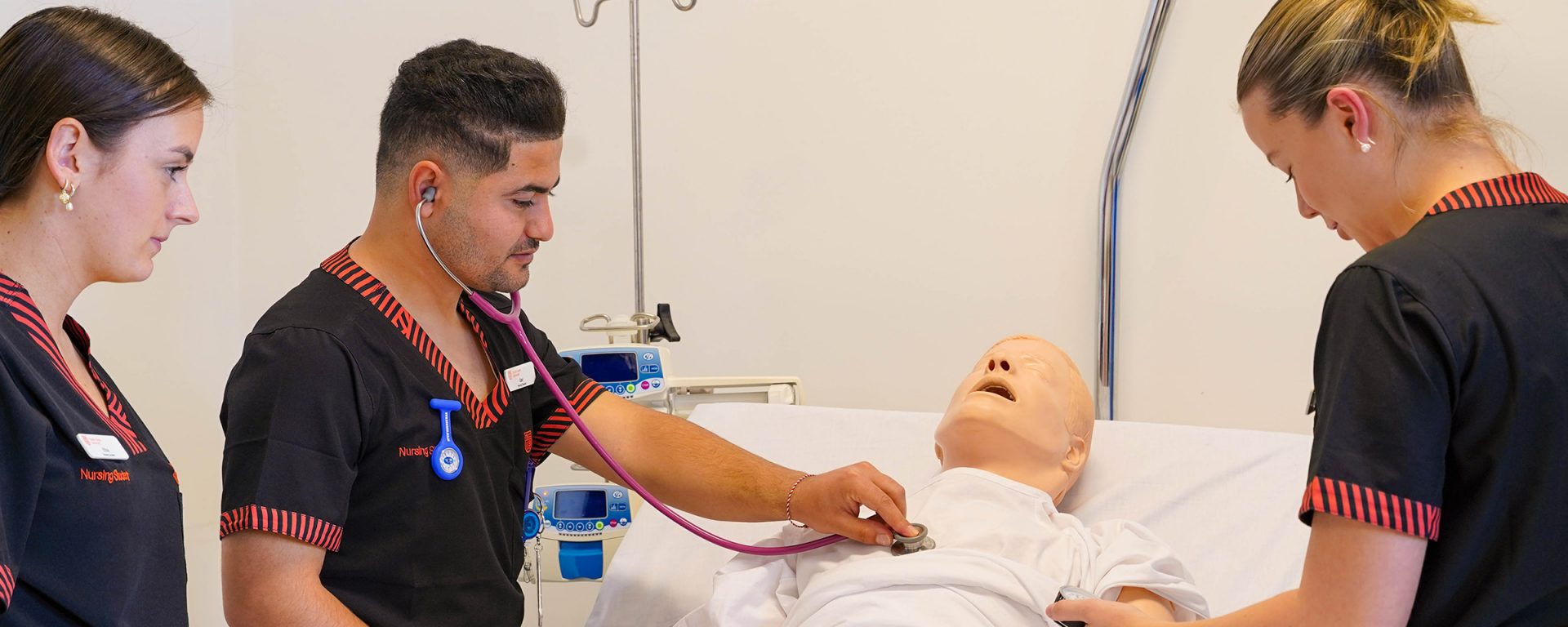
The world needs more registered nurses across diverse settings. Acute care, primary health care, aged care, mental health and rural and remote nursing. By 2035, almost 80,000 nurses will be needed to fill the gap.1
Are you ready to step up and make a difference? Great! But how do you become a registered nurse? Spoiler: There is more than one way to get there!
Why become a registered nurse?
Registered nurses serve an integral role in our health system. An RN career will give you the privilege of supporting a wide range of people and their families when and where they need it most. And there is so much scope to shape your career. For example, you could work in:
- Hospitals – Work across a range of areas including emergency, intensive care, acute medical or surgical, paediatrics and rehabilitation/
- Primary healthcare – Work in non-hospital settings, including general practices, child and family health, community health services or Aboriginal and Torres Strait Islander health services.
- Aged care – Support older people in community and in-home settings, or residential aged care facilities and hospitals.
- Mental health – Provide specialist care to people experiencing mental health conditions.
As you can see, registered nurses work across diverse health settings. They receive ongoing education, support and collaborative working experiences. Better still, there are many opportunities to advance or diversify in your career. For example, you could transition into midwifery with further study.
How do I become an RN?
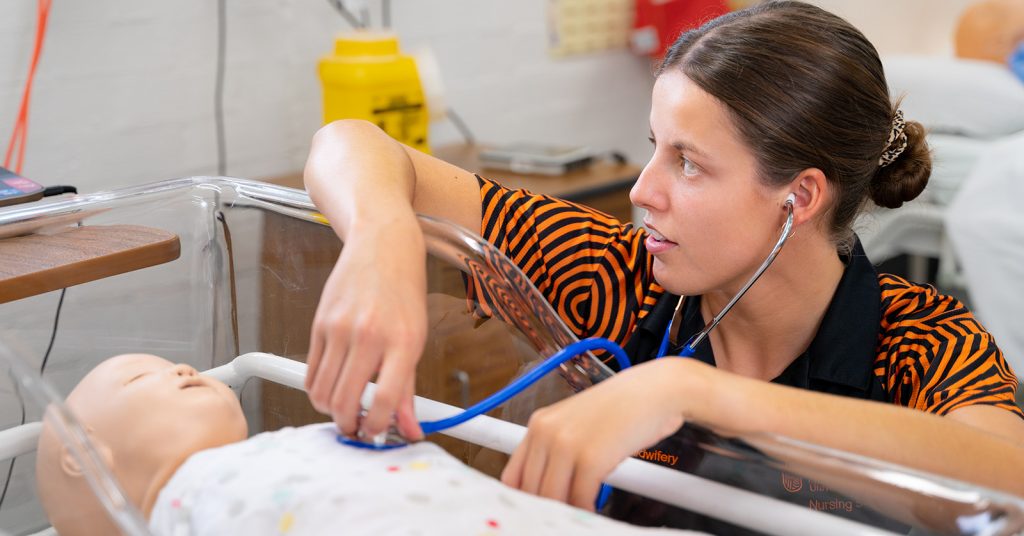
How you become a registered nurse depends on your unique circumstances, including your educational background, any prior TAFE or uni study, and whether you’ll start your journey when you finish high school or as a mature-age student.
Pathways differ depending on whether you’re a school leaver, a TAFE grad, or a uni graduate (we call these graduate-entry pathways). At Charles Sturt, we offer courses packed with hands-on learning that will prepare you for a rewarding nursing career!
Let’s find the right nursing pathway for you.
Option 1: Bachelor’s nursing degree
At Charles Sturt, our accredited Bachelor of Nursing2 is the ideal pathway to become a registered nurse if you’re coming to uni with a Certificate III, IV or Diploma qualification in another field (although not a requirement).
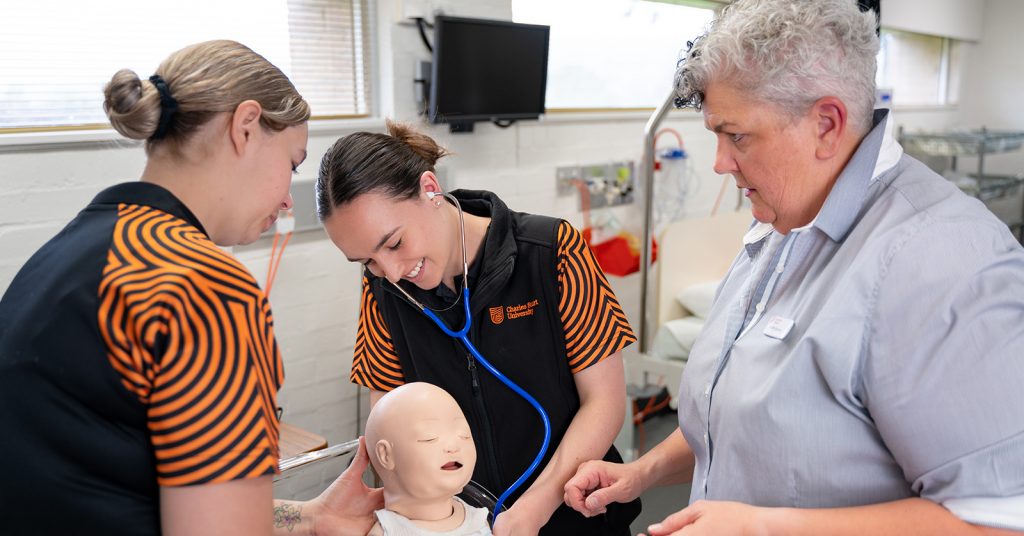
The Bachelor of Nursing is a three-year degree with plenty of hands-on, practical learning. Start by learning the foundations of nursing, then hone your person-centred care and clinical skills through simulation learning experiences and professional experience placements.
Take advantage of our partnerships with the Western, Far Western, Murrumbidgee and Mid North Coast Local Health Districts of NSW. You’re guaranteed real-world practical experience and can start your nursing career with confidence and professional connections.
Option 2: Accelerated EN to RN pathway
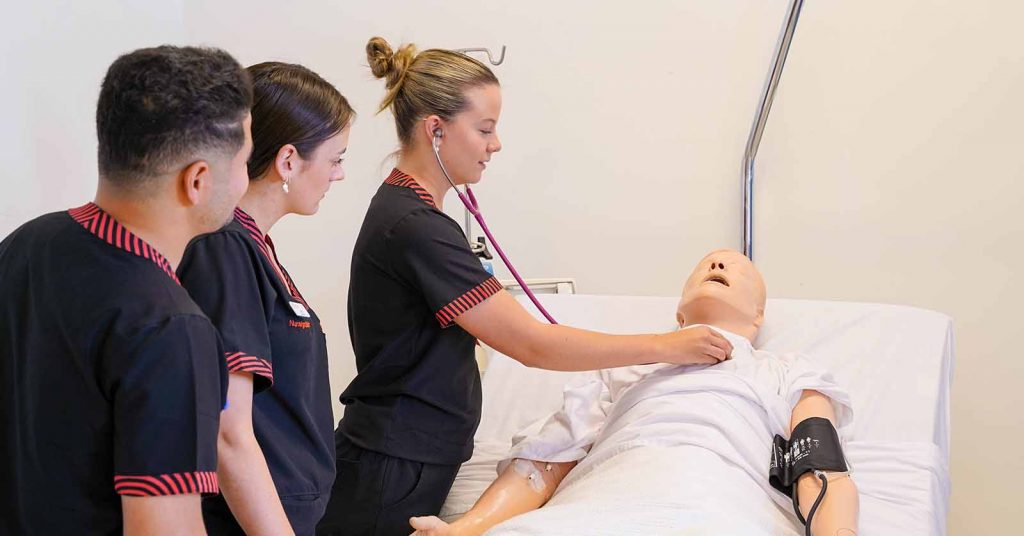
Are you an enrolled nurse (EN) who wants to take your career to the next level? This one’s for you.
If you’ve completed a Diploma of Nursing and are currently registered with the Australian Health Practitioner Regulation Agency (Ahpra) as an EN, you’re well on your way to becoming an RN. Enrol in our Bachelor of Nursing and move from enrolled nurse to registered nurse in two years when studying full-time! You’ll receive generous credit for your diploma qualification.
You can also explore our Connected Pathway Program, which includes wraparound support to help you transform your nursing diploma into a degree.
The transition from EN to RN opens a range of benefits and opportunities. You’ll enjoy a competitive salary (see below) and career opportunities including specialist practice, education and leadership.
| Registered nurse type | Example base annual salary ranges |
| Registered nurse | $81,000-114,000 |
| Clinical nurse specialist | $119,000-128,000 |
| Nurse unit manager | $143,000-154,000 |
| Clinical nurse consultant | $143,000-158,000 |
| Nurse practitioner | $158,000-169,000 |
Option 3: Graduate entry pathway
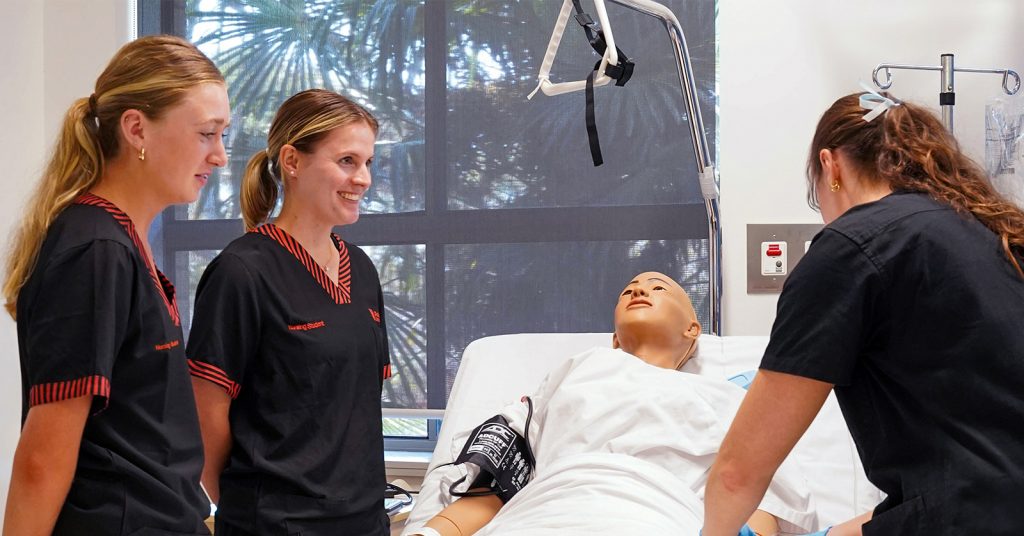
Have you completed a bachelor’s degree in another field and are looking to pivot to a career in nursing? Our brand-new Master of Nursing (Pre-registration) is your fast track to a registered nursing career.
If your degree includes two subjects of human anatomy and physiology, you meet the entry criteria but your degree doesn’t need to be health related! You can complete the human anatomy and physiology subjects at university level as single subject study or as part of a bridging program, and you’ll have everything you need to get started.
You can choose between on-campus study at Wagga Wagga or online study. If you study online, you’ll attend intensive schools at Wagga Wagga. Either way, you’ll start your nursing career with confidence, with over 800 hours of professional experience placement. You can also choose to study full-time or part-time. It’s study that fits your life!
Please note: This program of study is not yet accredited by ANMAC or approved by the NMBA and will not lead to registration as a nurse or midwife in Australia under the approved qualification pathway, National Law Section 53a. The course has been designed to meet ANMAC requirements and is currently under review by ANMAC, and when accredited, will lead to nurse registration.
Help with costs
Since there’s a shortage of registered nurses throughout Australia, there are extra incentives to help ease the cost of study and support you in becoming a registered nurse. Check them out below.
Want to work for NSW Health? You could be eligible for up to $12,000 in study support when you work with NSW Health after graduating. Funding covers fees, tech, travel and placement costs. Learn more.
Attention Victorian residents: Study the Bachelor of Nursing at our Albury-Wodonga campus and you could receive up to $16,500 through the Victorian Government’s nursing and midwifery scholarship scheme to help cover your study costs. Learn more.
Check whether you’re eligible for the Government’s Commonwealth Prac Payment. The CCP can help with costs associated with undertaking mandatory placement in a bachelor’s or master’s degree in nursing or midwifery.
Snapshot: Your guide to becoming an RN
| Pathway | Who it’s for | What it means |
| Undergraduate degree e.g. Bachelor of Nursing | School leavers and mature-age students. | – Study a bachelor’s degree. – Become a registered nurse in 3 years of full-time study. |
| EN to RN | Enrolled nurses with a Diploma of Nursing and current Ahpra registration. | – Get 1 year of credit towards your Bachelor of Nursing. – Move from EN to RN in just 2 years of full-time study. |
| Graduate entry e.g. Master of Nursing (Pre-registration) | Bachelor-qualified students (any discipline) | – Change career to nursing. – Get graduate entry based on your bachelor’s degree. – You’ll need to study two human anatomy and physiology subject before qualifying for entry to the master’s. |
How to apply for nursing registration
Below are the steps you’ll need to take to become a registered nurse.
- Study an approved degree: either a three-year Bachelor of Nursing or a graduate entry degree.
- Apply for registration: with the Nursing and Midwifery Board through the Australian Health Practitioner Regulation Agency (Ahpra).
- Begin your rewarding nursing career! From hospitals to the community, make an impact wherever you go..
For more detail about the registration process, visit the Nursing and Midwifery Board’s website.
Become a registered nurse with Charles Sturt
Whether you’re starting or continuing your nursing career, find the right course for you with Charles Sturt.
FAQs
What does a registered nurse do?
Registered nurses are regulated healthcare professionals who use critical thinking to conduct comprehensive assessments, develop care plans and coordinate other healthcare workers to provide nursing care in a range of settings. The role ranges from administering medications and interpreting diagnostic tests to supervising other healthcare workers and providing health education.
What steps do I need to take to become an RN?
First, study an approved nursing degree. Next, appply for registration with the Nursing and Midwifery Board through the Australian Health Practitioner Regulation Agency (Ahpra).Then start your rewarding nursing career!
How long does it take to become a registered nurse?
It takes three years of full-time study to become a registered nurse through the Bachelor of Nursing pathway. However, you can become an RN in as little as two years of full-time study with a graduate entry nursing degree or via the Diploma of Nursing pathway.
What are the registered nurse regulation requirements in Australia?
To practise as an RN in Australia, you’ll need to be registered with the Nursing and Midwifery Board of Australia (NMBA) through the Australian Health Practitioner Regulation Agency (Ahpra).
What study pathways are there for becoming a nurse?
If you’re a school leaver, you can study our Bachelor of Nursing. If you’re an enrolled nurse who has completed a Diploma of Nursing, the Bachelor of Nursing will help you move from EN to RN. Completed a bachelor’s degree and looking for a career change? Become an RN with our new graduate entry Master of Nursing (Pre-registration).
How much can a registered nurse earn?
In New South Wales, registered nurses earn a base salary of around $85,000 to $114,000.3 However, nurses often receive additional payments such as shift loading, overtime, on-call allowances, uniform and meal allowances, and salary packaging. So this can substantially increase your total earnings.
- Nursing Supply and Demand Study, 2024 ↩︎
- Bachelor of Nursing CRICOS 010599C ↩︎
- Registered Nurses, Job Outlook, 2006 ↩︎
You must be logged in to post a comment.