

Have you been working in the environmental field for a while? Are you looking for a way to boost your career options? An online Master of Environmental Management helps professionals like you build the scientific, management and practical skills you need to take that next step and solve environmental challenges across conservation, natural resources, sustainability and land management.
As exciting as that prospect is, taking on a postgraduate degree has to fit around your life: work, family… sleep.
The answer is online study. It gives you the ultimate in flexibility and the opportunity to take on your master’s degree from wherever you are.
So, let’s take a field trip through the practicalities of studying the Master of Environmental Management online, from what it takes to get a place to what you study once you have one. We’ll cover:
- What a Master of Environmental Management prepares you for
- Can you study a Master of Environmental Management while working?
- How long does the course take?
- What you need to get in
- How credit toward the course works?
- What you’ll study
- How online study works
- Gain your qualification in stages
- The careers a Master of Environmental Management can lead to
- Build on your experience and take your next career step
What a Master of Environmental Management prepares you for
Say the word ‘management’ and you might immediately think of someone in an office, coordinating workflows for their team, reviewing reports, keeping projects on track, and preparing presentations to impress the higher-ups.
But is it the same for environmental management?
Well, it can be! But it’s also the practice of protecting, restoring and managing natural systems. Making decisions that uphold ecological, social, regulatory and resource needs. Integrating scientific understanding to address real-world environmental challenges.
Your career could involve anything from conservation and land restoration to water management, sustainability, environmental compliance and government policy. You’ll find practical ways to protect our environment while supporting the communities and industries that depend on it.
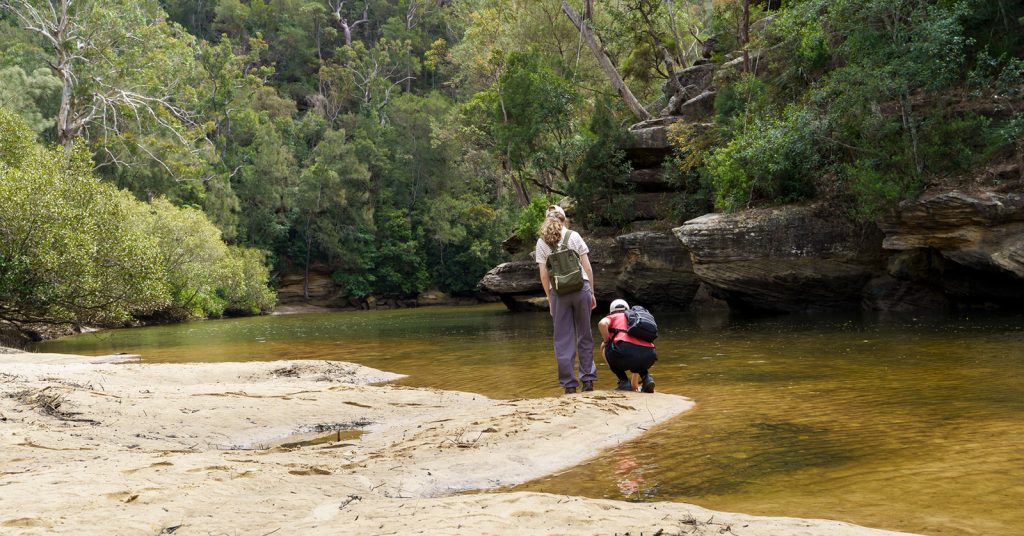
Can I study a Master of Environmental Management while working?
Short answer: yes, absolutely.
The Master of Environmental Management is designed to help you build your environmental expertise while continuing to work and manage your other commitments.
Online study allows you to take on your degree from wherever you are and choose a study pace that fits your circumstances. You don’t need to put your career on hold or relocate to access postgraduate environmental education.
This flexibility can be particularly valuable if your schedule changes throughout the year. Whether you’re balancing shift work, farming seasons, contract work, travel or family responsibilities, you can structure your studies around the demands of your life, all while continuing to work toward your qualification.
How long does the course take?
To graduate from the Master of Environmental Science, you need to complete 96 credit points*. All subjects in the course are worth eight points each, so that means 12 subjects.
If you study full-time, you take four subjects per teaching session across two sessions in the first year and one in the second. So, the minimum time to graduate is 1.5 years.
For many working professionals, that level of study load is probably not feasible alongside all the other life commitments. Part-time study halves the load in each session, taking the completion time to three years.
Subject to availability, you might even be able to craft your own personal timeline. Perhaps you have more time available to study at a certain point in the year; you could take on an extra subject or two. Other times, study has to take a more supporting role; then you could ease off for a session.
To help you make your decision, we generally advise that each eight-point subject will require approximately 10–12 hours of study per week. That’s watching lectures, attending tutorials, doing the reading and working on assignments.
What you need to get in
There are three pathways into the Master of Environmental Management*. You can apply if you have:
- a bachelor’s degree in any field
- an Honours degree in any field, and/or
- at least five years of relevant professional experience.
Everyone’s education and career journey is unique. You might not end up working in the field your undergraduate degree was in, for example. Life changes, you change, the working world changes. Plus, you might find that you want to make a career change, shift your focus to something new, or challenge yourself. That’s why you can apply for the course, even if you don’t have an educational background in environmental science.
If you have experience in the field, that could provide a way in, even if you don’t hold an undergraduate degree. We value the skills and knowledge you have accrued over your time in the workplace, and if you have at least five years of it, it is likely to secure you a place.
You may also receive credit for it.
How credit toward the course works
Recognition of prior learning (RPL) is the process by which we assess your previous study, skills and professional knowledge.
If that assessment is successful, you’ll get credit toward the course because we recognise you already have certain skills and competencies that would be taught through particular subjects.
The result? You won’t need to complete as many subjects to graduate. You could finish sooner – and also save on course fees.
Credit is not automatic. However, every credit application is reviewed by the course director, so you can be assured that your individual path to get here is given full consideration.
The other good news is that you can apply for credit when you complete your application for the course. (You can do this online and it should only take around 15 minutes.)
Top tip: If you intend to apply for credit, gather any relevant documents first. You will likely need to supply originals or certified copies of things like degree qualifications, academic transcripts, your CV, and professional references.
What you’ll study
There are three main topics that the Master of Environmental Management addresses: environmental science, management skills, and applied problem-solving*.
So, besides developing your scientific knowledge, you’ll also hone your ability to manage projects, navigate environmental policy and regulation, and make informed decisions that balance environmental, social and economic considerations.
This combination will prepare you for leadership roles across the environmental sector.
The qualification consists of 12 subjects. There are four compulsory core subjects and eight electives; you can tailor the course to your specific interests and career goals*.
The four core subjects every student completes*
| Subject | What it helps you do |
| BIO521 Restoration Science and Practice | Understand how degraded environments can be restored using evidence-based ecological principles. |
| NM509 Managing Projects and Resources | Develop the leadership and project management skills needed to deliver environmental projects successfully. |
| ENM522 Environmental Assessment and Auditing | Build expertise in environmental assessment, compliance and informed environmental decision-making. |
| IKC502 Critical Studies: Indigenous Australian Cultures, Histories and Contemporary Realities | Develop an understanding of Indigenous perspectives and knowledge systems relevant to caring for Country, land and water management. |
This interdisciplinary approach helps distinguish an environmental manager from a technical specialist, equipping you to lead projects, work with diverse stakeholders and make informed decisions that deliver practical – and equitable – environmental outcomes.
Selecting electives: Choose your focus
Alongside the four core subjects, you’ll complete eight elective subjects chosen from a selection of 27*. This flexibility allows you to construct a degree that’s relevant to your personal career goals, whether you’re interested in conservation, sustainability, environmental policy or technical environmental analysis.
Ecology and conservation
Passionate about protecting biodiversity and managing natural ecosystems? Choose subjects such as Conservation Biology, Wildlife Ecology, Wildlife Management, Landscape Ecology, Vegetation Management, Fire Ecology and Management, Behavioural Ecology, and Avian Biology*.
Rivers, water and climate
If your interests lie in managing Australia’s rivers and waterways, and responding to the changing climate, choose electives such as River and Floodplain Ecology, River and Floodplain Restoration and Management, River Hydrology and Geomorphology, Water Policy and Management, Climatology, and Climate Change Impacts, Mitigation and Adaptation*.
Policy, law and sustainability
Build your understanding of environmental governance and sustainable development through subjects such as Environmental Law and Management, Resilience Thinking and Ecologically Sustainable Development, and Challenges of Global Sustainable Development. This focus is ideal if you’re interested in environmental consulting, government, regulation and sustainability leadership*.
Technical and spatial skills
Develop practical analytical skills with subjects such as GIS 1, GIS 2, Remote Sensing 1, Remote Sensing 2, and Scientific Data Analysis. These technical capabilities are increasingly sought after in environmental planning, assessment and resource management*.
Applied and field-based learning
Subjects such as Field Ecology, Mine Sites and Contaminated Lands, and International Practical Experience provide opportunities to apply environmental management principles in real-world settings while developing practical skills valued across the industry*.
How online study works
Take your place in the Master of Environmental Management, and you’ll join Australia’s largest online university. Online study is all about giving you the flexibility to fit postgraduate study around your work, family and other commitments, without sacrificing access to support or learning resources.
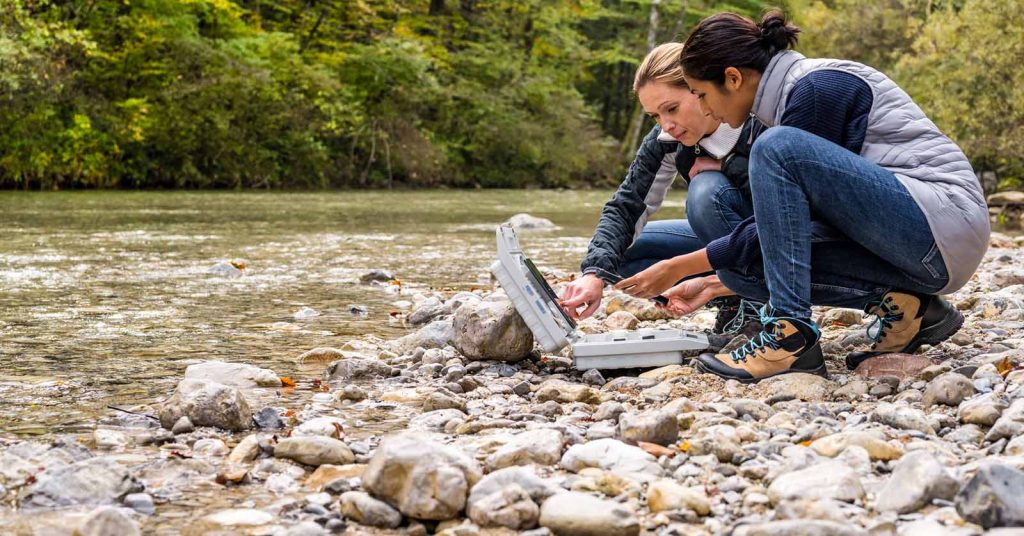
You’ll study through an interactive online learning platform where you can access recorded lectures, digital learning materials (everything from videos to collaborative wikis) and online discussions with your lecturers and classmates. You’ll also have access to the university library’s extensive digital collections 24/7, academic support services and technical assistance throughout your studies.
Some subjects also include intensive schools. These short, on-campus or field-based learning experiences may involve practical activities, tutorials or fieldwork designed to help you apply what you’ve learned in real-world settings. Not every subject includes an intensive school, so it’s worth checking the specific subject requirements before enrolling and choosing your electives.
Top tip: Check out the scholarships page; you may be eligible for financial help toward the cost of attending intensive schools.
Gain your qualification in stages
The Master of Environmental Management is what we call an articulated qualification. That means it comprises three qualifications, with each building on the work done in the previous one.
The course structure looks like this:
Master of Environmental Management articulation*
| Completed study | Qualification |
| 4 subjects | Graduate Certificate in Environmental Management |
| 8 subjects | Graduate Diploma of Environmental Management |
| Full course | Master of Environmental Management |
If you want to, you can exit at either the graduate certificate or graduate diploma stages. You’ll have an advanced qualification and a whole new skillset that you can take into your workplace – or use to make your next career move.
Then, if you want to come back and complete the next stage, you can pick up where you left off; no need to start at the beginning again.
This phased approach can be very useful if you want to test out a postgraduate degree, if you know you have bigger commitments coming up, or if you want to see if the initial qualification(s) are enough to get you where you want to go professionally.
The careers a Master of Environmental Management can lead to
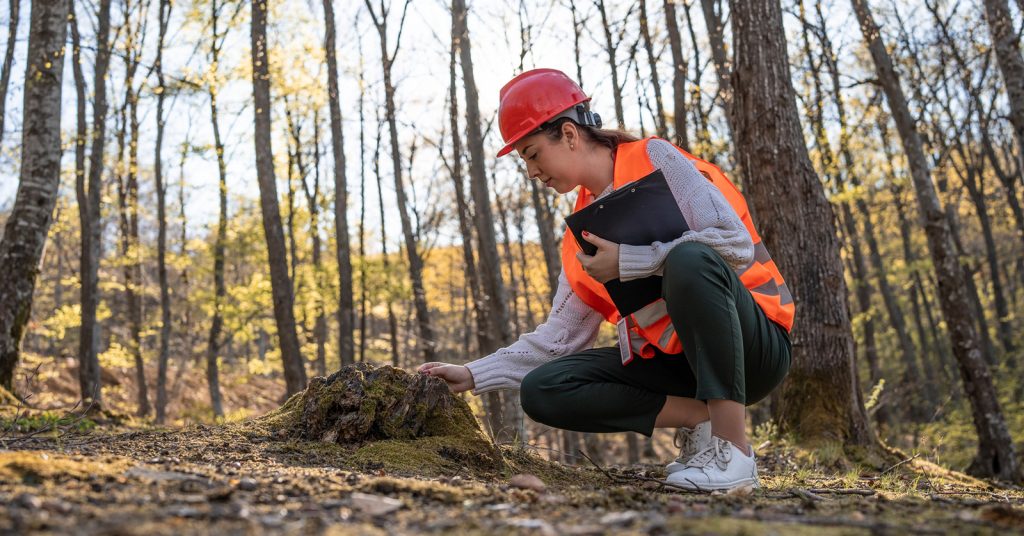
A Master of Environmental Management can prepare you for roles that combine environmental expertise with strategic planning, project delivery and decision-making. You might work in government, consulting, not-for-profit organisations or industry.
Wherever you choose to work, the course will equip you to help organisations manage natural resources, meet regulatory requirements and deliver sustainable outcomes, for nature and people.
Depending on your interests and choice of elective subjects, you could pursue roles involving:
- environmental assessment and compliance
- environmental consulting
- habitat and biodiversity management
- land and water management
- local, state or federal government environmental policy and management
- restoration and rehabilitation projects
- sustainability strategy and programs.
Alongside advanced environmental knowledge, you’ll develop skills during the course in project management, resource planning, and environmental assessment. You’ll be ready to lead projects, manage budgets, oversee compliance, contribute to organisational decision-making and take on leadership responsibilities.
Environmental management skills are in demand across a wide range of sectors as organisations respond to increasingly complex environmental challenges, sustainability goals and regulatory requirements. Not to mention, they command an average salary of $165,000 to $185,000.1
Whether you’re looking to deepen your technical expertise or move into leadership, the qualification can help position you for the next stage of your career.
Build on your experience and take your next career step
Whether you’re looking to deepen your environmental expertise, move into leadership or formalise the skills you’ve developed throughout your career, the Master of Environmental Management offers a flexible pathway to help you get there.
With multiple entry pathways, part-time online study options, opportunities for credit based on previous study or experience, and a wide choice of electives, you can shape the qualification around your goals and commitments.
Explore the Master of Environmental Management to learn more about the course. And don’t forget that if you have any questions about your eligibility, pathway options, credit, or the application process or anything else, we’re always here to chat.
FAQs
Do I need an environmental science degree to study a Master of Environmental Management?
No. We accept applicants from a wide range of academic and professional backgrounds, so you don’t necessarily need to have previously done a degree in environmental science. Depending on your qualifications or relevant work experience, you may be eligible for admission through different entry pathways.
Can I study environmental management online while working full-time?
Yes, absolutely. The course is designed with flexible learning in mind, making it suitable for working professionals to complete by distance education. You can study online from anywhere in Australia, whether that’s metro or regional, access learning materials at times that suit you and adjust your study load to fit around work, family and other commitments.
How long does a Master of Environmental Management take?
The course duration depends on your study load. Most students complete this masters degree in between 1.5 and 3 years. The former figure would be considered full-time; the latter, part-time. Within that, there may be scope to take on more subjects in some sessions and less in others, depending on what else you have going on at those times. Plus, if you’re eligible for credit based on previous study or recognition of prior learning, you may be able to reduce the time it takes to graduate.
Does Charles Sturt University’s Master of Environmental Management include practical learning?
Yes. While the course is delivered online, some subjects include practical learning opportunities such as intensive schools, fieldwork or other hands-on activities. These experiences will help you apply the environmental management concepts you learn in lectures and tutorials to real-world situations, and build practical skills alongside your theoretical knowledge.
*The information in this article is subject to change. Please check our course page for the most up-to-date information.
You must be logged in to post a comment.